Let me be straight with you: when I first started researching how to set up a charcoal production plant, I had no idea what I was getting into.
I spent weeks contacting different suppliers, comparing prices, and trying to figure out which machines I actually needed. Every manufacturer gave me a different answer. One said I needed a dryer. Another said I didn‘t. One quoted me for a carbonization furnace. Another insisted I needed a briquetting line first.
It was a nightmare.
That’s why I‘m writing this—to save you from making the same mistakes I almost made. If you’re serious about starting a charcoal factory, you need to understand what a turnkey solution actually includes and why it‘s the difference between launching in three months versus twelve.
What Exactly Is a Turnkey Charcoal Plant?
A turnkey charcoal plant is a complete, ready-to-operate production system. You hand over your requirements—raw material type, target capacity, site dimensions, budget—and the supplier delivers a fully functional plant. All you have to do is “turn the key” and start production.
But here’s the critical point: not all turnkey solutions are created equal.
Some suppliers call themselves “turnkey” but only sell you a pile of machines. Real turnkey means end-to-end responsibility. It means your supplier handles everything from factory layout design to equipment selection, delivery, installation, commissioning, and staff training.
What a Full-Service Turnkey Solution Actually Includes
After going through this process myself and working with clients across multiple countries, I‘ve broken down what a genuine full-service turnkey solution should cover.
1. Raw Material Assessment & Plant Design
This is where it all starts. Before a single machine is ordered, your supplier should analyze your feedstock—whether it‘s wood chips, coconut shells, rice husks, bamboo, or sawdust. Different materials require different equipment configurations.
A proper turnkey provider will then design your entire factory layout based on:
- Your site size and shape
- Local power and utility availability
- Material handling flow
- Safety and ventilation requirements
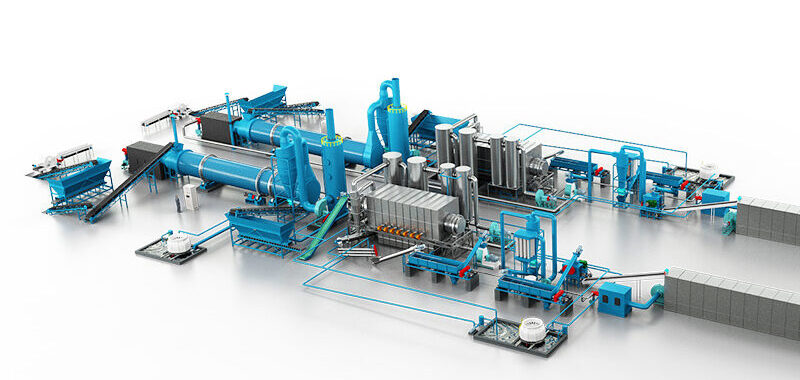
You should receive a 2D or 3D layout plan showing exactly where every machine goes.
2. Complete Equipment Selection & Supply
Here‘s what a complete charcoal production line typically includes:
Pre-processing equipment:
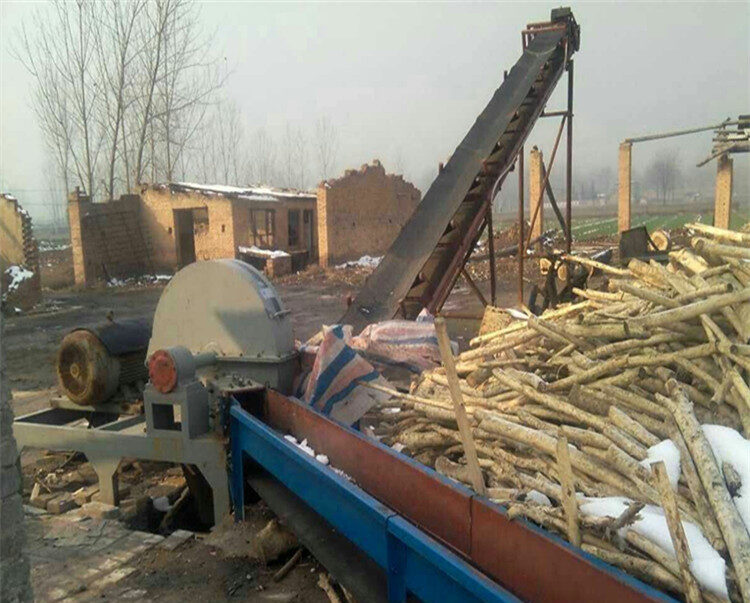
- Crusher/Hammer mill – reduces raw material to 3–5mm particles for uniform processing
- Rotary drum dryer – controls moisture content to 8–12%, critical for quality briquetting and carbonization
- Briquetting system (if you‘re making briquettes):
- Briquette machine – extrudes biomass into solid rods under high temperature (280–350°C) and pressure (50–100MPa)
Carbonization system:
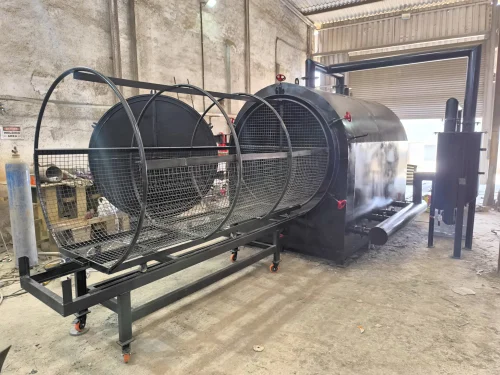
- Continuous carbonization furnace – the heart of the plant. Unlike traditional batch kilns that waste 30–40% of feedstock as smoke, modern continuous furnaces operate 24/7 and recycle pyrolysis gas as fuel
Post-processing:
- Cooling systems
- Screening equipment
- Packaging machinery
Emission control:
- Cyclone separators, condensers, and scrubbers for smoke treatment and environmental compliance
3. Factory Layout & Workflow Optimization
This is where many DIY approaches fail. You can buy all the right machines, but if they‘re placed inefficiently, you’ll lose production capacity and create safety hazards.
A turnkey provider designs your entire workflow—from raw material intake to finished product storage—to maximize efficiency and minimize labor costs.
4. Delivery, Installation & Commissioning
This is the part that separates real turnkey providers from equipment sellers.
Your supplier should:
- Handle all shipping and logistics
- Send technical teams to your site for installation
- Assemble all machines and connect electrical, piping, and control systems
- Test each section independently
- Run a full-process trial production
Most importantly, they should stay until your plant produces qualified charcoal consistently. One supplier I know guarantees stable production within 15–25 working days after equipment delivery.
5. Staff Training & Operational Handover
Machines don‘t run themselves. Your team needs to know how to operate, maintain, and troubleshoot every piece of equipment.
A full-service turnkey solution includes on-site training for your local operators. This covers:
- Daily operation procedures
- Maintenance schedules
- Safety protocols
- Basic troubleshooting
6. After-Sales Support & Warranty
The relationship shouldn’t end when the machines start running. Look for:
- 12-month warranty on main equipment
- Spare parts availability
- Remote diagnostics and technical support
- Ongoing process optimization advice

Why This Matters for Your Business
I‘ve seen too many entrepreneurs try to piece together equipment from different suppliers to save money. It almost never works out cheaper in the long run.
Here’s what happens: Machine A doesn‘t match Machine B’s capacity. The dryer is undersized. The carbonization furnace can‘t handle the output from the briquetter. You spend months debugging, losing production time and burning through your operating budget.
A turnkey solution eliminates these headaches. Everything is engineered to work together. Your supplier takes full responsibility for performance.
And here’s the kicker: a well-designed turnkey plant typically achieves 98% of planned production volume within weeks of commissioning. That means faster ROI and quicker cash flow.
Is a Turnkey Solution Right for You?
If you‘re:
New to the charcoal industry
Working with a limited budget where mistakes are costly
Operating in a country where technical support is hard to find
Looking to start production quickly
…then a turnkey solution isn’t just nice to have—it‘s essential.
Yes, it costs more upfront than buying machines individually. But when you factor in the time saved, the reduced risk, and the faster path to profitability, it’s almost always the smarter investment.
Frequently Asked Questions
Q1: What is a turnkey charcoal plant?
A turnkey charcoal plant is a complete, ready-to-operate production system where the supplier handles everything from design and equipment supply to installation, commissioning, and staff training.
Q2: What equipment is included in a complete charcoal production line?
A full line typically includes a crusher, rotary dryer, briquette machine, continuous carbonization furnace, cooling system, screening equipment, packaging machinery, and emission control systems.
Q3: How long does it take to set up a turnkey charcoal plant?
After equipment delivery, installation and commissioning typically take 15–25 working days. The entire process from order to production-ready usually ranges from 30 to 90 days depending on plant size and complexity.
Q4: What raw materials can a charcoal plant process?
Most modern plants can process wood chips, sawdust, coconut shells, rice husks, bamboo, palm kernel shells, and various agricultural wastes.
Q5: How much does a turnkey charcoal plant cost?
Costs vary widely based on capacity and configuration. A small-scale production line costs approximately $5,000–15,000 USD, while **medium-to-large-scale lines** can reach $30,000–80,000 USD. Large continuous lines can exceed $200,000.
Q6: Do I need special permits to operate a charcoal plant?
Yes. Most countries require environmental permits, business licenses, and sometimes specific certifications for emissions control. A good turnkey provider can advise on local compliance requirements.
Q7: What‘s the difference between batch and continuous carbonization?
Batch kilns require stopping and restarting between production cycles, while continuous furnaces operate 24/7 with uninterrupted material flow. Continuous systems are more efficient and productive for industrial-scale operations.
Q8: Can a charcoal plant run on renewable energy?
Yes. Modern carbonization furnaces recycle pyrolysis gas produced during the process as fuel, significantly reducing external energy consumption.
Q9: What’s the typical conversion rate from raw material to charcoal?
Well-optimized systems typically convert 25–35% of dry biomass into usable charcoal.
Q10: How many workers does a charcoal plant need?
It depends on automation level and capacity. Small to medium plants typically require 10–20 operators, while larger automated facilities may need fewer.
Q11: What‘s included in after-sales support?
Standard support includes a 12-month equipment warranty, spare parts supply, remote diagnostics, and on-call technical assistance.
Q12: How do I choose the right turnkey supplier?
Look for suppliers with proven experience, verifiable case studies, transparent pricing, responsive communication, and comprehensive service offerings from design to after-sales support.
Ready to start your charcoal business?
At Huaxin Machinery, we’ve been delivering turnkey biomass solutions for over 15 years across 40+ projects worldwide. We don‘t just sell machines—we design, build, and support complete production systems tailored to your specific raw materials, capacity goals, and budget.
Contact us today for a free factory layout plan and customized quotation.