When I first searched for a small scale charcoal business startup kit, I expected a neat box with everything inside. What I found instead was scattered advice, confusing charcoal making machine price ranges, and sales pages that only wanted my money. It took me almost a year of trial and error — and about $3,000 in avoidable mistakes — to figure out what a real charcoal production line actually looks like at the small-business level.
So let me save you that year. In this charcoal business plan guide, I’ll walk you through exactly what equipment you need, what it costs, how the money works, and where beginners usually fail. I’m writing this as someone who runs a small charcoal briquette business for beginners operation with three employees — not as a salesperson.
Why Now Is a Good Time to Start a Charcoal Business
Charcoal demand is not going away. Barbecue culture keeps growing, shisha lounges are expanding across the Middle East and Southeast Asia, and more restaurants prefer consistent BBQ charcoal briquettes over irregular lump charcoal. The global charcoal briquette market was valued at around USD 4.14 billion in 2025 and is projected to reach USD 7.56 billion by 2035, growing at roughly 6.2% per year.
Here’s what matters for you: big factories chase container orders. They ignore the local butcher, the neighborhood BBQ stand, the small hotel. That gap is exactly where small scale charcoal production wins.
What a Real Startup Kit Contains
Forget the marketing word “kit.” A practical small scale charcoal business startup kit is simply the minimum set of equipment that turns raw biomass into sellable charcoal. Based on my experience, here’s the honest list:
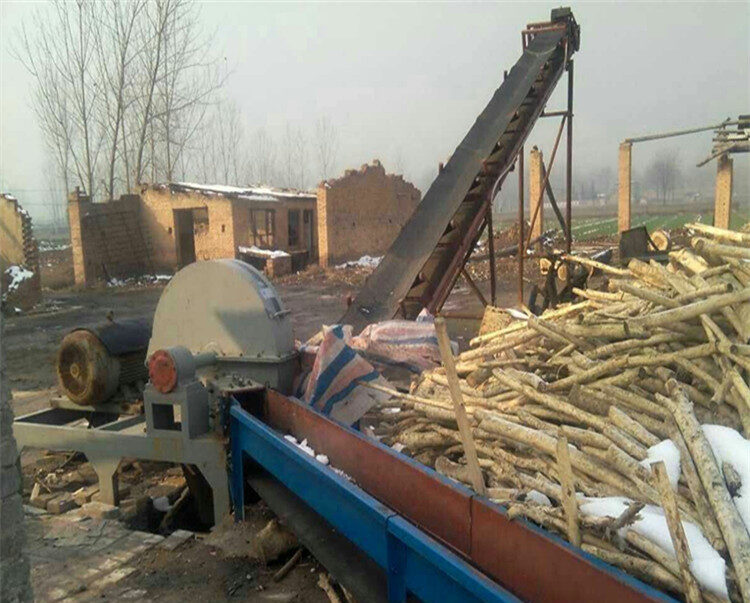
1. Crusher / Hammer Mill (~$500–$3,000)
Your raw material — sawdust, coconut shells, rice husks — must be crushed below 5mm before processing. If you plan to run a sawdust charcoal briquette machine, this step is non-negotiable. Skip it and your briquettes will crack.
2. Dryer (~$1,000–$4,000)
This is the machine beginners underestimate most. Material with over 12% moisture produces smoky, weak briquettes. In my first rainy season, I lost two weeks of production because I relied on sun drying. Never again.
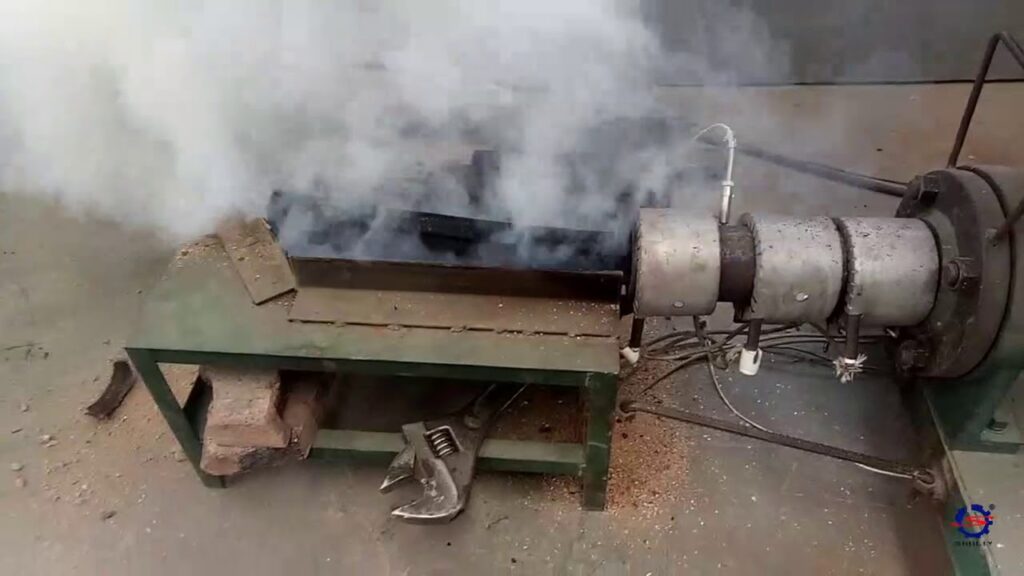
3. Charcoal Briquette Press (~$1,000–$8,000)
For small operations, a screw-type charcoal briquette machine handling 200–500 kg/h is the sweet spot. Small-scale lines of this capacity typically cost $5,000–$15,000 in total. Manual charcoal briquette press machine units under $1,000 exist, but I’ve seen them bend and crack within months.
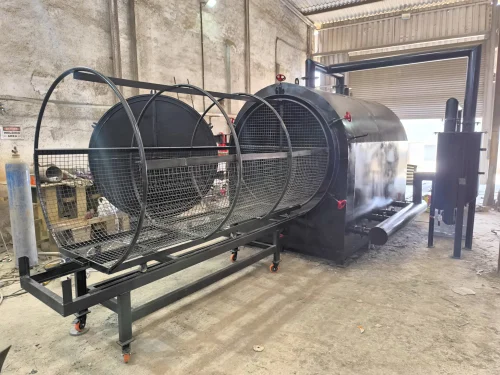
4. Carbonization Furnace (~$3,000–$10,000)
A small carbonization furnace converts your biomass briquettes into real charcoal. If you work with charcoal fines from existing producers instead of raw biomass, you can actually skip carbonization at the beginning — that’s how I started.
5. Small Tools Everyone Forgets (~$100–$300)
A moisture meter ($20), heat-resistant gloves, weighing scale, sample bags. Small costs, big difference.
The Real Startup Cost Breakdown
Let’s be honest about numbers — especially the charcoal making machine price question, which everyone asks first. Here is what my startup actually cost, and what I’d budget today:
| Item | My Cost | Typical Range |
|---|---|---|
| Equipment (crusher, mixer, press) | $6,200 | $5,000–$15,000 |
| Used carbonization furnace | $4,500 | $3,000–$10,000 |
| Site rental deposit (6 months) | $1,800 | Varies locally |
| Permits & registration | $600 | $300–$2,000 |
| Initial raw materials | $900 | $500–$2,000 |
| Packaging (500 printed bags) | $450 | $300–$1,000 |
| Working capital (3 months) | $2,500 | $2,000–$5,000 |
| Total | ~$16,950 | $12,000–$25,000 |
You can start leaner. If you buy charcoal fines locally and only press briquettes with a biomass briquette machine, you could launch for under $8,000. But don’t believe anyone who says $2,000 is enough for a serious operation — that number covers a manual press and nothing else.
Choosing Your Raw Material: The Decision That Decides Your Profit
Your raw material determines 60% of your profit margin. Here’s how the common options compare:
- Sawdust: Often free from furniture factories. Ideal feedstock for a sawdust charcoal briquette machine. Best all-rounder for beginners.
- Coconut shells: Excellent carbon content, burns long. A coconut shell charcoal making machine is ideal if you’re near a coconut processing region. Premium BBQ charcoal briquettes markets love it.
- Bamboo: Fast-growing and sustainable. Works well for lump charcoal and activated charcoal products.
- Rice husks / peanut shells / sugarcane waste: Nearly free agricultural waste, but lower density briquettes. Good for local fuel markets.
My rule: never pay more for transport than for the material itself. Source within 50 km.

How the Money Works: A Simple ROI Model
Let me show you my actual numbers from month six of running my charcoal briquette business for beginners setup:
- Output: 300 kg of BBQ charcoal briquettes per day
Raw material + binder + labor: about $45/day - Wholesale price: $0.55/kg → $165/day revenue
- Net profit: roughly $120/day, ~$3,000/month
My total equipment investment was about $11,000, so payback took around 4 months of steady small scale charcoal production. Most well-run small operations break even within 6–12 months. The key variables are your local charcoal price and how consistently you can sell.
Permits and Legal Basics (Don't Skip This)
Every location differs, but plan for: business registration, a forestry or biomass sourcing permit, and environmental clearance for smoke emissions. In some countries, eco friendly charcoal made from agricultural waste qualifies for green business subsidies — it’s worth asking your local authority. One of my competitors ignored emissions rules and got shut down after eight months. That single mistake cost him everything.
Five Mistakes I Made (So You Don't Have To)
- Buying the cheapest charcoal briquette machine online. It broke in three weeks. The seller stopped replying.
- Buy from a manufacturer with real after-sales support and spare parts.
Ignoring moisture control. Get a moisture meter on day one. Under 10% moisture is your target. - Producing before selling. I made 2 tons of briquettes before talking to a single buyer. Test your market with sample bags first — give free samples to BBQ restaurants and ask for weekly volume commitments.
- Wrong binder ratio. Test 5%, 7%, and 10% with your specific material. Too much binder = smoky and expensive; too little = briquettes that crumble.
- Skipping quality testing. Burn your own briquettes. Check burn time, ash content, and smell. If you wouldn’t use it, don’t sell it.
Five Mistakes I Made (So You Don't Have To)
After my first machine failure, I became very strict about suppliers. Here’s my checklist, which I now share with everyone who asks how to start a charcoal business the right way:
- Does the manufacturer offer a video factory tour or allow visits?
- Are spare parts (dies, screws, seals) for your charcoal briquette press machine in stock and shipped quickly?
- Do they provide installation guidance and operator training?
- Can they customize molds for your target market — hexagonal for BBQ charcoal briquettes, cube for shisha charcoal machine output?
- Will they give you a real production plan based on YOUR raw material, not a copy-paste quote?
This is exactly the standard we hold ourselves to at Huaxin Machinery. We supply complete charcoal production line setups — crusher, dryer, mixer, charcoal briquette machine, and carbonization furnace — as matched sets, so nothing is over- or under-sized. Every client gets a free raw material test and a production plan before we quote.
Final Thoughts
A small scale charcoal business startup kit is not a product you buy — it’s a system you build. The equipment matters, but raw material control, moisture management, and early customer conversations matter just as much. Start with one press, prove your market with sample bags, then scale.
I started with a broken $400 press and a lot of doubt. Two years later, my briquettes supply eleven restaurants and two supermarkets. You don’t need a factory. You need the right kit, honest numbers, and the discipline to test before you invest.
❓ Frequently Asked Questions (FAQ)
1. How much does a charcoal making machine cost?
A complete small charcoal making machine price package typically ranges from $5,000 to $15,000, depending on capacity and configuration.
2. How to start a charcoal business with little money?
Begin with a pressing-only setup: buy charcoal fines locally, press them with a small charcoal briquette press machine, and sell to local BBQ restaurants. Launch cost: under $8,000.
3. What is a charcoal briquette machine?
A charcoal briquette machine compresses charcoal powder or biomass material with binder into uniform briquettes of consistent shape and density.
4. Can I use sawdust in a charcoal briquette machine?
Yes. A sawdust charcoal briquette machine is one of the most common setups, since sawdust is often free from furniture factories and processes easily after drying.
5. Is a coconut shell charcoal making machine worth it?
Yes, if you’re near coconut processing regions. Coconut shell charcoal burns longer and sells at a premium in BBQ charcoal briquettes and export markets.
6. How profitable is a charcoal briquette business for beginners?
A typical charcoal briquette business for beginners producing 200–300 kg/day can net $2,000–$4,000 per month, with payback in 4–12 months.
7. Lump charcoal or briquettes — which should I make?
Briquettes are easier for beginners: consistent shape, cheap raw materials, and steady demand. A full charcoal production line can always add lump production later.
8. What is a carbonization furnace and do I need one?
A carbonization furnace carbonizes raw biomass into charcoal. You need one if processing sawdust or shells yourself; you can skip it initially by buying charcoal fines.
9. Is charcoal production eco friendly?
Yes, when done right. Eco friendly charcoal made from agricultural waste like sawdust and coconut shells reduces deforestation and often qualifies for green subsidies.
10. What binder should I use for BBQ charcoal briquettes?
Food-grade starch or cassava flour at 5–10% of material weight. Test ratios with your specific raw material before scaling.
11. What capacity should a small scale charcoal production line have?
For most local markets, 200–500 kg/h is the sweet spot — enough for steady profit without overwhelming your sales channels.
12. Can one machine make both BBQ and shisha charcoal?
Yes. With mold customization, the same charcoal briquette machine can produce hexagonal BBQ charcoal briquettes and cube shapes for the shisha charcoal machine market.