Why I'm Writing This Guide
Over the past decade, I’ve stood on more factory floors than I can count — textile plants in Surat, brick kilns in Morbi, food processing lines in Southeast Asia. And in almost every one, I hear the same question from plant managers: “Should we switch from coal to biomass briquettes, and if so, which ones?”
I work with Huaxin’s biomass machinery division, where we design and build biomass briquette production lines for clients in over 40 countries. That means I see this from both sides: I’ve helped manufacturers produce sawdust briquettes and rice husk briquettes, and I’ve helped buyers evaluate them. This guide shares what I’ve actually learned in the field — not marketing copy.
What Are Biomass Briquettes, Exactly?
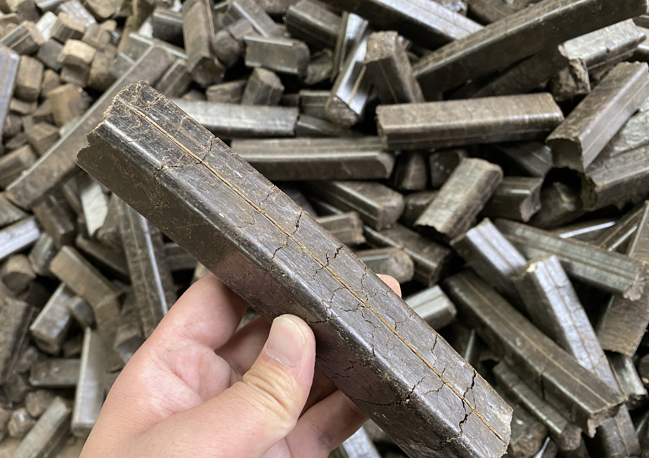
Biomass briquettes are solid biofuel blocks made by compressing agricultural and forestry waste — sawdust, rice husks, groundnut shells, bagasse, cotton stalks, coffee husks — under high mechanical pressure, with no chemical binders. The natural lignin in the biomass softens under pressure and heat, then acts as the glue.
The result is a dense, uniform block, typically 50–90 mm in diameter and 150–300 mm long, with a gross calorific value of roughly 3,800–4,400 kcal/kg. Compare that to loose sawdust (around 2,500–2,800 kcal/kg) or lignite, and you start to see why industries are switching to eco-friendly briquettes as a renewable energy fuel.
From a waste-management perspective, the story is just as strong. Materials that would otherwise be burned in open fields or sent to landfill become a clean burning biomass fuel. In India alone, an estimated 500+ million tonnes of agricultural residue is generated every year, and a large share of it still goes to waste.
How the Biomass Briquette Manufacturing Process Actually Works
When we design a biomass briquette manufacturing plant for a client, the process always follows the same core sequence:
- Size reduction — Raw material is chipped and hammer-milled to under 5 mm. This is non-negotiable: oversized particles kill briquette density.
- Drying — This is the single most critical step in the biomass briquette production process. Raw biomass often arrives above 40–50% moisture. We target 8–15%, with around 12% being the sweet spot. Screw this up and everything downstream fails.
- Screening — Removes oversized particles and contaminants before feeding the biomass briquette press.
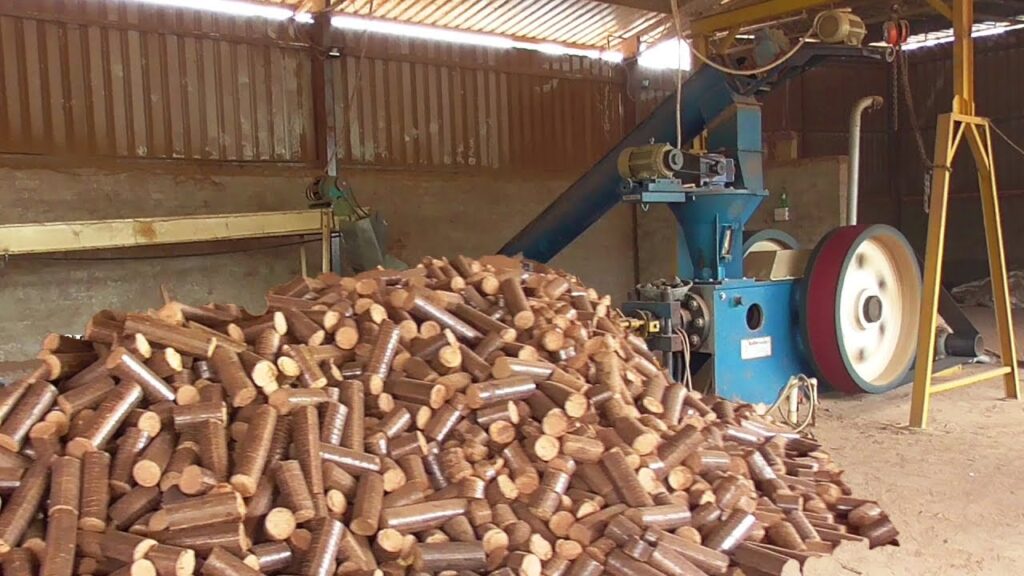
- Briquetting — A piston press (best for fibrous materials) or screw press briquetting machine compresses the material. No binders needed when moisture and particle size are right.
- Cooling and packaging — Fresh bio coal briquettes are fragile; they must cool before handling.
I’ve seen clients try to skip the drying stage to save on biomass briquette machine costs. Every single one came back within a year to add a proper dryer. Learn from their mistake.
Biomass Briquettes vs. Wood Pellets: The Honest Comparison
This is the comparison I get asked about most — and a search term people use constantly: “biomass briquettes vs wood pellets.” Most articles online get it wrong by framing it as “which is better.” It’s the wrong question. The right question is: which fits your combustion system?
| Parameter | Biomass Briquettes | Wood Pellets |
|---|---|---|
| Size | 50–90 mm blocks/logs | 6–8 mm cylinders |
| Calorific value | 3,800–4,400 kcal/kg | 4,200–4,800 kcal/kg |
| Ash content | 3–6% | 1–3% |
| Feeding system | Manual / semi-automated | Fully automated |
| Best for | Fixed-grate boilers, kilns, batch furnaces | Stoker boilers, co-firing, precision heating |
| Production cost | Lower (coarser feedstock tolerated) | Higher (finer grinding, more energy) |
Here’s my practical rule of thumb from the field:
- Choose briquettes if you run a fixed-grate boiler in the 0.5–3 ton/hour range, operate brick kilns that need slow sustained heat, lack automated feeding infrastructure, or are budget-sensitive on fuel price per ton.
- Choose pellets if your stoker boiler is 3+ tons/hour with pneumatic feeding, you need precise temperature control (pharma, food processing), or you’re co-firing biomass in power plants.
I tell clients this directly, even when Huaxin sells both types of equipment. A wrong fit costs you 10–20% in fuel efficiency every month — far more than any equipment margin.
The Numbers That Matter When Buying Biomass Briquettes
When I evaluate biomass briquette quality — whether for our own production lines or advising a buyer — I ask for these four test results:
- Calorific value: Demand 3,800+ kcal/kg for industrial use. Anything below 3,500 suggests poor raw material or inadequate drying.
- Moisture content: Must be under 12–15%. Higher moisture means wasted energy evaporating water instead of producing heat.
- Ash content: Under 5% for premium biomass briquettes. High ash clinkers your grates and increases downtime.
- Density: Over 1.0 g/cm³ indicates proper compression. Soft, crumbly briquettes disintegrate during transport and handling.
Any biomass briquette supplier who can’t provide lab test data for these parameters is a supplier to walk away from. This is my strongest piece of advice in this entire article.
Who's Actually Buying Biomass Briquettes in 2026?
From what I see across our client base and the broader biomass fuel market:
- Industrial boilers and furnaces remain the largest segment — steam generation in textile, food, and chemical plants.
- Brick and cement kilns are switching rapidly to biomass briquette fuel as emission norms tighten across India, Southeast Asia, and East Africa.
- Power generation uses briquettes for captive power and co-fired renewable energy.
- Institutional heating — schools, hospitals, hotels — is a growing niche, especially in Europe where biomass heating incentives remain strong.
The macro tailwind is real. Coal price volatility, tightening emission regulations, and corporate ESG commitments are pushing procurement departments toward biomass as an alternative to coal at an accelerating pace. Plants that made the switch in 2020–2023 are now reporting 15–30% fuel cost savings versus their coal baseline, depending on local feedstock prices.
Common Mistakes I See Buyers Make
- Buying on price alone. A ₹2/kg cheaper briquette with 500 kcal/kg less energy and 3% more ash is not cheaper. Do the math on cost per million kcal, not cost per ton.
- Ignoring storage. Biomass absorbs moisture from air. Covered, ventilated storage is essential, or your fuel degrades before it burns.
- Skipping trial runs. Always burn a trial batch of biomass briquettes on your own boiler before committing to a contract.
- Assuming briquettes work in any boiler. They work brilliantly in the right boiler and poorly in the wrong one. Match the fuel to the grate design first.
My Bottom Line
Biomass briquettes are not a compromise fuel — they’re a strategic one. For the right application, they deliver coal-comparable heat at lower cost, lower emissions, and a renewable energy story that stands up to ESG scrutiny. But the fit matters: raw material quality, moisture control, and boiler compatibility will determine whether you save 20% or lose 10%.
Frequently Asked Questions
1. What is the calorific value of biomass briquettes?
Typically 3,800–4,440 kcal/kg, depending on feedstock. Groundnut shell briquettes and sawdust briquettes sit at the higher end; rice husk briquettes tend toward the lower end due to silica content.
2. Are biomass briquettes cheaper than coal?
In most markets, yes — often 20–40% cheaper per unit of heat. But compare cost per million kcal, not per ton, since energy content differs.
3. Do biomass briquettes need chemical binders?
No. Properly dried biomass (8–15% moisture) contains enough natural lignin to bind under high pressure. Any supplier adding binders is compensating for poor briquette press process control.
4. What raw materials can be used for biomass briquettes?
Sawdust, rice husk, groundnut shell, bagasse, cotton stalk, coffee husk, wheat straw, and most other dry agricultural waste briquettes feedstocks. Very high-silica materials work but produce more ash.
5. What is the ideal moisture content for briquetting biomass?
8–15%, with around 12% optimal. Above 15%, briquettes crack and crumble; below 8%, binding weakens.
6. Can I use biomass briquettes in my existing coal boiler?
Usually yes, with minor grate and feeding adjustments. Fixed-grate boilers and chain-grate boilers typically need the least modification. Always run a combustion trial first.
7. How long do biomass briquettes store?
Six to twelve months in dry, covered, ventilated storage. Moisture exposure is the main degradation risk.
8. Are biomass briquettes carbon neutral?
They’re considered carbon-neutral biofuel under most accounting frameworks: the CO₂ released during combustion equals what the plants absorbed during growth. Actual footprint depends on drying energy source and transport distance.
9. What’s the difference between a piston press and a screw press for briquetting?
Piston presses handle fibrous, coarse materials well and suit high-output plants. Screw presses suit finer particles and produce smoother, denser briquettes but have higher wear part costs.
10. What is the minimum order quantity for bulk biomass briquette supply?
This varies by biomass briquette manufacturer. Reputable suppliers typically start at 10–20 metric tons for fuel briquettes and offer meaningful price breaks above 100 tons.
11. How do I verify biomass briquette quality before ordering?
Request third-party lab results for calorific value, moisture, ash, and density — then burn a trial batch on your own equipment. Never commit to a long-term contract without both.
12. Is biomass briquette manufacturing a profitable business?
With secure, low-cost feedstock and proximity to buyers, yes — gross margins of 25–35% are common in well-run briquette manufacturing plants. The biggest risks are feedstock supply instability and under-budgeting the biomass drying stage.
🎯 Ready to Make the Switch to Biomass Briquettes?
Whether you’re evaluating biomass briquettes as fuel for your boiler or planning a briquette production plant from scratch, our engineers at Huaxin can help you make the right call — with honest technical advice, complete biomass briquette production line solutions, and lab-tested briquette samples.
Contact Huaxin today for a free fuel assessment, customized production line proposal, or trial biomass briquette samples. Tell us your boiler type and current fuel — we’ll tell you exactly what works.