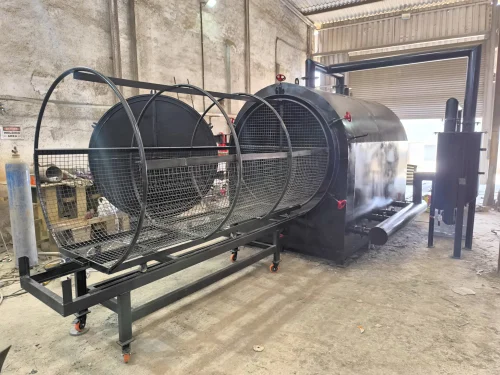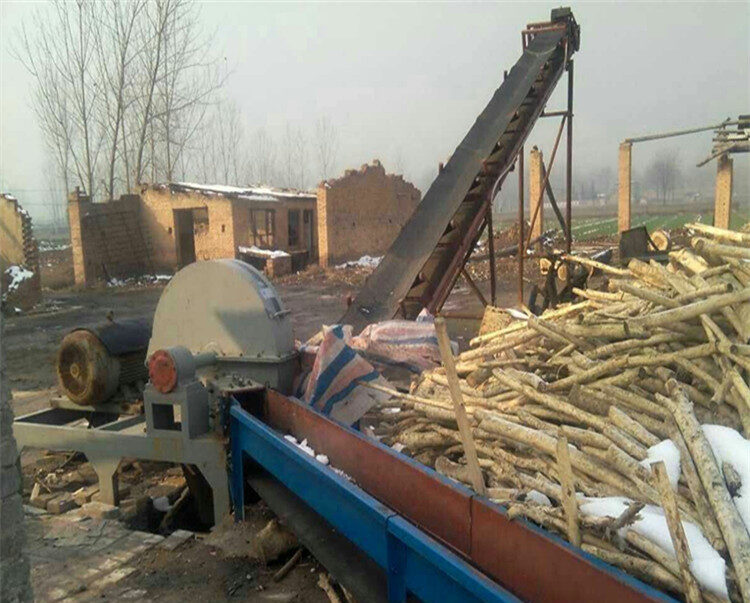
When a client from Kenya first called us at Huaxin, he asked a simple question: “Is a 10t/day charcoal production line worth the money, or should I start smaller?” After helping more than 200 charcoal plant owners design, install, and commission their charcoal production equipment over the past decade, I can tell you there is no universal answer — but there is a right way to think about it. In this guide, I will share the investment tips our engineers give every serious buyer before they sign a contract for a charcoal making machine or a complete line.
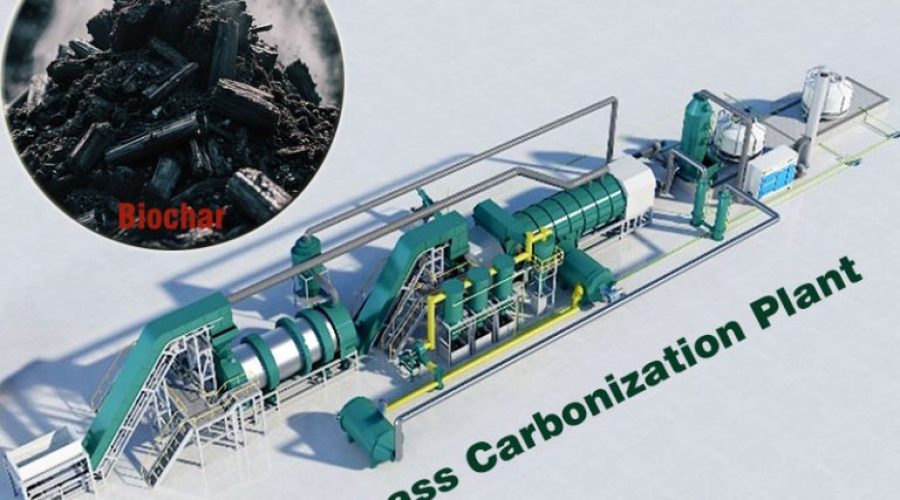
Why 10 Tons Per Day Is the "Sweet Spot" Capacity for Charcoal Manufacturing
In our project experience, 10 tons per day sits at a practical turning point for industrial charcoal production. Below this capacity, most operators struggle to serve export contracts or large wholesale buyers consistently. Above it, you enter heavy-industry territory with much higher permitting and capital requirements.
A 10t/day biomass charcoal production line typically means:
- Input requirement: roughly 28–30 tons of raw biomass per day (carbonization yield of 33–36% for materials like coconut shells)
- Power demand: around 55–75 kW for a fully automated configuration
Footprint: approximately 16 ft × 40 ft of production space, plus raw material storage - Labor: 6–10 operators per shift, depending on automation level
This scale also positions you for premium markets — shisha charcoal, BBQ charcoal briquettes, and industrial fuel — where margins are 2–3 times higher than bulk cooking charcoal.
Investment Tip #1: Budget Beyond the Charcoal Machine Price
The most common mistake we see among charcoal machine buyers is budgeting only for equipment. In real projects, the charcoal production line itself usually represents 50–60% of total startup capital. A realistic charcoal plant setup cost includes:
| Cost Item | Typical Range (USD) |
|---|---|
| Complete charcoal production equipment (crusher, dryer, carbonization furnace, briquetting, packaging) | $80,000 – $150,000 |
| Civil works, foundation, and installation | $15,000 – $40,000 |
| Shipping and import duties | $8,000 – $25,000 |
| Working capital (3 months of raw materials, labor, utilities) | $20,000 – $50,000 |
| Permits, environmental assessment, fire safety | $5,000 – $15,000 |
Raw materials will become your largest operating expense at 40–50% of OpEx, followed by utilities at 20–25%. If your biomass source is more than 50 km away, logistics alone can erase your profit margin — so secure feedstock before you buy a charcoal making machine for sale.
Investment Tip #2: Choose the Carbonization Furnace First
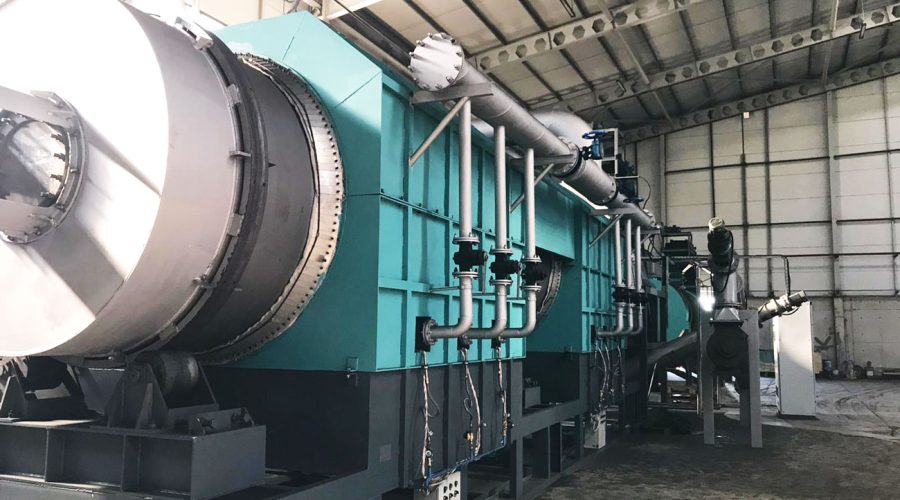
If I had to name one machine that determines your success, it is the carbonization furnace. It defines your yield, your product quality, your emissions compliance, and your fuel costs.
For 10t/day output, we consistently recommend a continuous carbonization furnace over batch kilns for how to make charcoal at scale, because:
- It runs 24/7 with minimal manual handling
- It captures and reuses combustible gases, cutting external fuel costs by 30–50%
- It produces consistent, high fixed-carbon charcoal that passes export quality checks
- It integrates cleanly with emission-control systems (electrostatic dust removal, alkaline scrubbing)
Batch kilns are cheaper upfront, but in our commissioning records, continuous systems reach payback faster because of labor savings and higher yields — a critical factor in any charcoal making business profit calculation.
Investment Tip #3: Match Your Equipment to Your Raw Material
Not all biomass behaves the same way. Before we configure any biomass charcoal making machine, we ask clients to send us samples of their actual raw material. Here is how typical feedstocks compare:
- Coconut shell charcoal machine: 33–36% yield, premium shisha market, needs pre-crushing and drying
- Sawdust charcoal machine / sawdust briquette machine: excellent for briquettes, requires a dryer to reach 8–12% moisture
- Bamboo charcoal machine: fast-growing, good yield, popular in Asian markets
- Rice husk charcoal making machine: lower yield (20–25%) but extremely cheap or free feedstock
Buying a “generic” line without testing your material is how investors end up with low-strength briquettes and unhappy buyers. Material testing should be step one of your charcoal production process planning.
Investment Tip #4: Understand Your Real ROI in a Charcoal Business Plan
Based on projects we have tracked, a well-run 10t/day charcoal briquette production line shows these economics:
- Output: 300 tons of finished charcoal per month
- Wholesale price: $200–300/ton for standard BBQ charcoal briquette machine products; $400–600/ton for shisha-grade coconut charcoal
- Monthly revenue: $60,000 – $120,000 depending on product grade
- Operating costs: raw materials, labor, electricity, packaging, logistics — typically $30,000 – $55,000/month
- Net margin: 15–25% after full costing
This translates to a payback period of roughly 12–24 months. Shisha-focused operations in coastal regions often recover investment in under a year — a key line item in any charcoal business plan. The single biggest profitability lever is product grade: the same coconut shells can earn 2–3 times more when pressed into uniform cubes by a hookah charcoal machine.
Investment Tip #5: Treat Compliance as an Asset, Not a Cost
New investors often view emission permits and dust-control systems as friction. We see the opposite: compliant charcoal manufacturing plants stay open. Communities shut down smoky operations, and export buyers now routinely ask for emission and quality documentation.
Budget for:
- An environmental impact assessment before construction
- Electrostatic dust removal and exhaust gas treatment on the furnace
- Fire safety certification — carbonization is a high-temperature process, and insurers require it
- Basic QC equipment: moisture meter, fixed-carbon testing, drop-strength testing for briquettes
These systems cost a fraction of your charcoal production equipment but protect the entire investment.
Investment Tip #6: Negotiate After-Sales Support Before You Pay
A 10t/day line is a 10–15 year asset. Before choosing a charcoal machine supplier, we advise buyers to verify:
- Do they provide on-site installation and commissioning, or only manuals?
- Is operator training included, and for how many staff?
- What is the guaranteed spare parts delivery time for wear components (screws, dies, seals)?
- Can they share reference projects in your region that you can visit or call?
In our own service records, the difference between a charcoal plant for sale that reaches full capacity in 3 months and one that struggles for a year usually comes down to commissioning quality, not machine quality.
Final Thoughts: Start With the Market, Not the Machine
The investors who succeed at 10t/day capacity share one habit: they line up at least two committed buyers — a wholesaler and an export agent — before production begins. Capacity without demand is just expensive inventory.
If you are evaluating a 10t/day industrial charcoal production line investment, treat it as what it is: a mid-scale industrial project with real engineering, real compliance requirements, and real returns when the fundamentals are handled properly.

Frequently Asked Questions (FAQ)
1. How much does a 10t/day charcoal production line cost?
The complete charcoal production equipment typically ranges from $80,000 to $150,000, while total project investment including civil works, shipping, permits, and working capital usually falls between $130,000 and $280,000.
2. How many tons of raw material do I need for 10 tons of charcoal per day?
At a typical carbonization yield of 33–36%, you will need approximately 28–30 tons of biomass input daily, depending on the material and moisture content.
3. What is the payback period for a 10t/day charcoal plant?
Most well-run operations recover their investment in 12–24 months. Shisha-grade coconut shell charcoal operations often achieve payback in under 12 months.
4. Is a continuous carbonization furnace better than a batch kiln?
For 10t/day capacity, yes. A continuous carbonization furnace offers 24/7 operation, 30–50% lower fuel costs through gas recycling, and more consistent product quality.
5. What raw materials work best for a 10t/day line?
Coconut shells, sawdust, bamboo, wood waste, and agricultural residues all work. We always recommend testing your actual material before finalizing the charcoal machine configuration.
6. How much floor space does a 10t/day line require?
Plan for roughly 16 ft × 40 ft of production space plus raw material storage, drying areas, and finished-goods warehousing.
7. What power supply does the line need?
A fully automated 10t/day line typically requires about 55–75 kW of three-phase electricity, depending on the dryer and charcoal briquette machine configuration.
8. Do I need environmental permits to run a charcoal plant?
Yes, almost everywhere. Expect to need business registration, an environmental impact assessment, and fire safety certification before operations begin.
9. Can I start smaller and upgrade to 10t/day later?
Absolutely. Many of our clients begin with a 1–3 t/h configuration and scale up by adding parallel furnaces and briquetting units, which is more capital-efficient than over-building on day one.
10. What is the difference between charcoal and activated carbon?
Charcoal is produced by carbonization alone. Activated carbon goes through an additional steam or chemical activation step, creating pores that enable adsorption for water and air purification — a higher-value market.
11. How long does installation and commissioning take?
From order confirmation, allow 2–4 months including shipping, installation, test runs, and operator training.
12. What after-sales support should I expect from a charcoal machine supplier?
Look for on-site installation, operator training, documented spare parts supply (ideally delivered within 7–15 days), and verifiable reference projects in your region.
Contact Huaxin Now for Your FREE Customized Production Line Proposal & Quote!
Every successful charcoal plant starts with the right configuration.
✅ FREE production line layout & equipment plan
✅ FREE detailed investment cost breakdown
✅ FREE ROI projection report
✅ Response within 48 hours from our engineers
📩 Send us your raw material type and target capacity today — and let the Huaxin team turn your biomass into real profit!